StylopediaStylopedia

Perception styles on Stylopedia

A visual encyclopedia of perception styles – use as prompt inspiration for Midjourney, Gemini, or ChatGPT AI when making perception images

Example of visual style of Akiyoshi Kitaoka

Akiyoshi Kitaoka

Akiyoshi Kitaoka is a Japanese psychologist and artist known for his visually mesmerizing optical illusions. His style, developed in the late 1990s and popularized in the 2000s, focuses on the creation of mind-bending patterns and illusions that play with our perception of color, depth, and motion. Kitaoka's work gained fame due to its ability to deceive the viewer's visual system and create the illusion of movement or distortions in static images. His optical illusions have been widely shared online and showcased in various exhibitions, contributing to the growing interest in perceptual psychology and the appreciation of visual illusions.

View StyleExplore Style
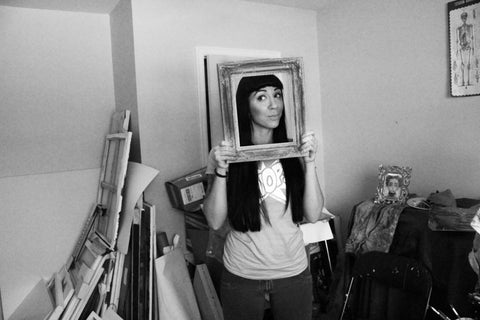
Example of visual style of Charles Ray

Charles Ray

Charles Ray is a contemporary visual artist who is known for his hyperrealistic sculptures. His work gained fame in the 1990s for its meticulous attention to detail and for challenging notions of scale and perception. Ray's sculptures often explore themes of human identity and the relationship between the body and its environment. Through his use of lifelike materials and precise craftsmanship, he creates visually stunning and thought-provoking artworks that blur the boundaries between reality and artifice.

View StyleExplore Style
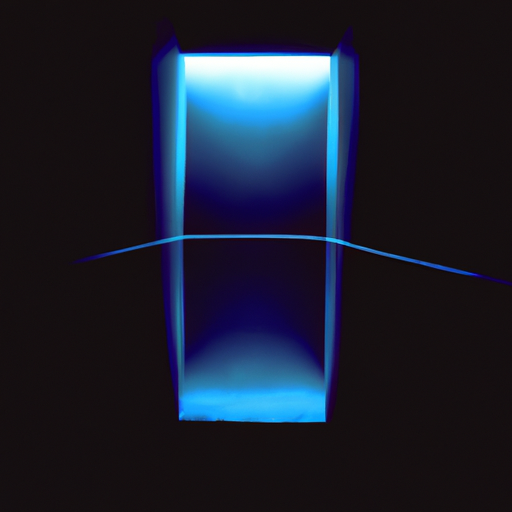
Example of visual style of Doug Wheeler

Doug Wheeler

Doug Wheeler is an American interactive installation artist known for his use of light and space. He rose to prominence in the 1960s and 1970s as part of the Light and Space movement in Southern California. Wheeler's installations create immersive environments that manipulate perception and challenge traditional notions of space. His work often involves the use of fluorescent lights, translucent materials, and carefully controlled lighting to create ethereal and otherworldly experiences.

View StyleExplore Style
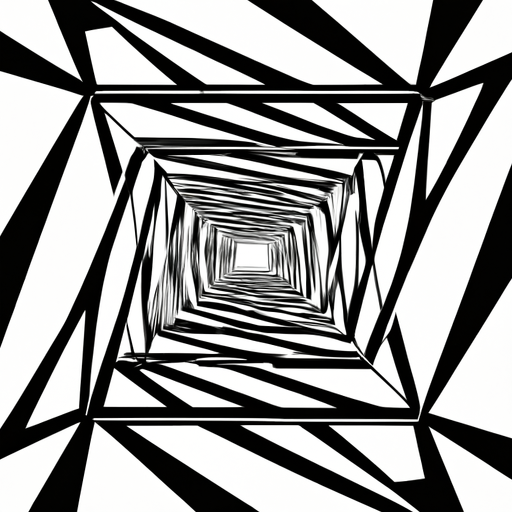
Example of visual style of Gustavo Pantone

Gustavo Pantone

Gustavo Pantone is a contemporary visual style that combines elements of op art, geometric abstraction, and street art. It emerged in the early 2010s and gained popularity for its futuristic and vibrant aesthetics. Pantone's works are characterized by dynamic patterns, bold lines, optical illusions, and a futuristic color palette. His style has become famous for its ability to create visually captivating and immersive experiences, often playing with the viewer's perception and challenging the boundaries of traditional art forms.

View StyleExplore Style
Example of visual style of Hiroshi Sugimoto

Hiroshi Sugimoto

Hiroshi Sugimoto is a contemporary Japanese photographer known for his minimalist and conceptual approach to black and white photography. He gained fame in the 1970s with his series 'Seascapes' and 'Theaters', which explore the concepts of time, memory, and perception. Sugimoto's meticulous compositions and long exposure times create ethereal and timeless images. His work is characterized by its precise framing, high contrast, and exquisite use of light and shadow.

View StyleExplore Style
Example of visual style of James Turrell

James Turrell

James Turrell is an American artist known for his pioneering work in light and space. Starting in the 1960s, Turrell began experimenting with perception and spatial experience through his installations. He is famous for creating immersive environments that manipulate light and color to create mesmerizing visual experiences. Turrell's works often involve simple geometric shapes and utilize architectural elements to control and transform the viewer's perception of light. His exploration of light as a medium has made him a prominent figure in the field of contemporary art.

View StyleExplore Style

Example of visual style of Larry Bell

Larry Bell

Larry Bell is an American artist known for his minimalist style and innovative use of glass. He rose to prominence in the 1960s with his series of cube sculptures made of transparent glass. These sculptures incorporated reflective surfaces that created a play of light and space, giving an illusion of depth. Bell's work became famous for its ability to challenge perception and explore the relationship between object and viewer. His minimalist approach and emphasis on simplicity and geometric forms made him a key figure in the Light and Space movement.

View StyleExplore Style
Example of visual style of Light And Space Movement

Light And Space Movement

The Light and Space Movement emerged in the 1960s in Southern California. This style emphasizes the perception of light and space as artistic mediums, exploring their physical and psychological effects. Artists working within this movement sought to create immersive and ethereal environments through the use of reflective materials, translucent surfaces, and innovative light installations. Notable years for the movement include the 1960s and 1970s. The Light and Space Movement gained fame for its unique ability to heighten sensory experiences, blur boundaries between art and environment, and evoke a sense of serenity and spirituality.

View StyleExplore Style
Example of visual style of Richard Serra

Richard Serra

Richard Serra is an American artist known for his minimalist and monumental sculptures. He rose to prominence in the late 1960s and early 1970s with his site-specific steel sculptures that redefine spatial boundaries and challenge the viewer's perception of space and time. Serra's work often consists of large, curved or spiraling metal forms that interact with the architectural environment. His sculptures invite viewers to physically engage with the artwork and experience its scale and weight, creating an immersive and contemplative experience. Serra's innovative approach to sculpture has made him a key figure in contemporary art.

View StyleExplore Style
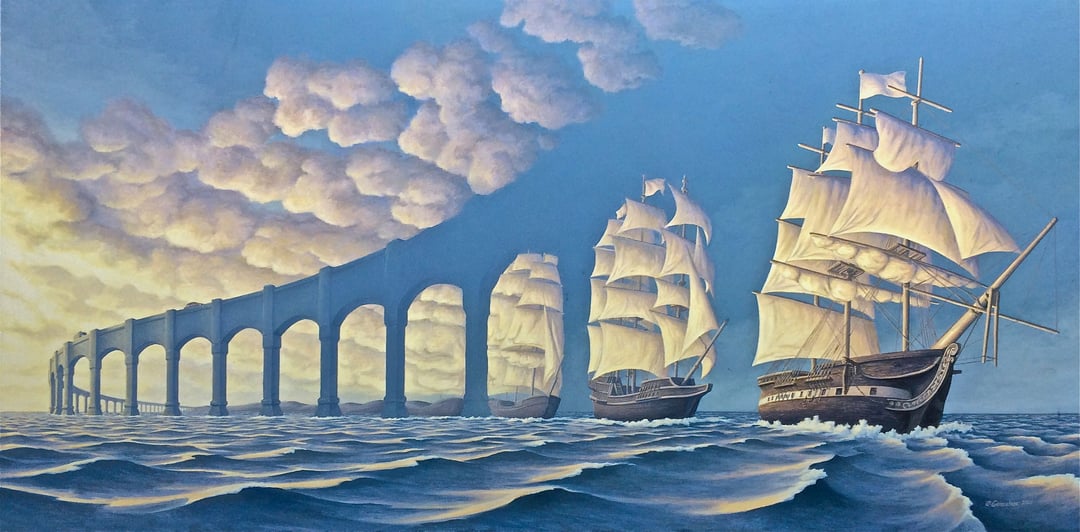
Example of visual style of Rob Gonsalves

Rob Gonsalves

Rob Gonsalves is a Canadian painter known for his style of magical realism. His paintings feature stunning scenes that seamlessly blend multiple realities and perspectives, creating optical illusions and mind-bending visuals. Gonsalves gained fame in the late 1990s and early 2000s for his unique and imaginative artwork. He became known for his ability to depict scenes where the boundaries between reality and imagination are blurred, often incorporating architectural elements and natural landscapes. His paintings invite viewers to question the nature of perception and challenge the limitations of the human eye.

View StyleExplore Style
Example of visual style of Robert Irwin

Robert Irwin

Robert Irwin is an American artist known for his contributions to the Light and Space movement, which emerged in the 1960s. His minimalist and immersive installations explore light, space, and perception. Irwin's works often involve subtle alterations in the exhibition environment, such as carefully orchestrated lighting, veiling, and reflective surfaces. His influential installations gained recognition in the late 1960s and continue to shape the contemporary art landscape.

View StyleExplore Style
Example of visual style of Robert Morris

Robert Morris

Robert Morris is a visual artist associated with the Minimalist movement of the 1960s. His work, particularly between 1961 and 1970, helped redefine the boundaries of sculpture by emphasizing simplicity, geometric forms, and industrial materials. Morris's use of sculptural installations and geometric shapes, such as cubes and rectangular prisms, challenged traditional notions of art and explored ideas of space, time, and perception. His work in the 1960s, along with other Minimalist artists, gained international recognition and established him as a key figure in contemporary art.

View StyleExplore Style
Example of visual style of Satoshi Kon

Satoshi Kon

Satoshi Kon's visual style is known for its surreal and mind-bending storytelling combined with detailed and realistic animation. He gained fame for his unique ability to blur the lines between reality and fantasy, often exploring themes of identity and perception. Kon's style emerged in the late 1990s and early 2000s, with standout works such as 'Perfect Blue' (1997), 'Millennium Actress' (2001), and 'Paprika' (2006). His films are lauded for their intricate storytelling, intricate plot structures, seamless blending of dream and reality, and striking visual imagery.

View StyleExplore Style
Example of visual style of Vasarely

Vasarely

Vasarely is a visual style that emerged in the 1960s and 1970s, primarily attributed to the Hungarian-French artist Victor Vasarely. It is characterized by its use of geometric shapes, bold colors, and optical illusion effects. Vasarely became famous for his exploration of Op Art (Optical Art), creating artwork that appeared to be in constant motion and played with the viewer's perception. His innovative approach to art and his ability to create captivating illusions made Vasarely one of the most influential figures in the Op Art movement.

View StyleExplore Style
Home