StylopediaStylopedia

Color styles on Stylopedia

A visual encyclopedia of color styles – use as prompt inspiration for Midjourney, Gemini, or ChatGPT AI when making color images

Example of visual style of Abstract Art

Abstract Art

Abstract Art is a modern art style that emerged in the early 20th century and gained popularity in the early 1910s. It is characterized by a departure from realistic representation and a focus on the expression of ideas and emotions through non-representational forms and colors. Notable for its emphasis on shapes, lines, colors, and textures, Abstract Art sought to convey an artist's subjective perspective rather than depict objective reality. This style challenged traditional notions of art and opened up new avenues for experimentation, inspiring artists to explore the boundaries of creativity.

View StyleExplore Style

Example of visual style of Ad Reinhardt

Ad Reinhardt

Ad Reinhardt was an American abstract painter known for his minimalist black paintings. He became famous in the 1950s with his signature style characterized by geometric shapes and solid black fields. Reinhardt's work challenged the notion of painting as representation and emphasized the purity of form and color. His influential writings and teachings also made him a prominent figure in the art world. The style of Ad Reinhardt continues to be celebrated for its exploration of the limits of abstraction.

View StyleExplore Style
Example of visual style of Akiyoshi Kitaoka

Akiyoshi Kitaoka

Akiyoshi Kitaoka is a Japanese psychologist and artist known for his visually mesmerizing optical illusions. His style, developed in the late 1990s and popularized in the 2000s, focuses on the creation of mind-bending patterns and illusions that play with our perception of color, depth, and motion. Kitaoka's work gained fame due to its ability to deceive the viewer's visual system and create the illusion of movement or distortions in static images. His optical illusions have been widely shared online and showcased in various exhibitions, contributing to the growing interest in perceptual psychology and the appreciation of visual illusions.

View StyleExplore Style
Example of visual style of Alex Jaeger

Alex Jaeger

Alex Jaeger is known for his work in the field of concept art and visual effects. He has a distinct style characterized by attention to detail, realistic rendering, and a strong use of color. His works often feature futuristic and sci-fi elements, with a focus on creating believable and immersive environments. Alex Jaeger rose to prominence in the late 1990s and early 2000s, with his work on films like Starship Troopers (1997) and the Men in Black series. His ability to bring fantastical worlds to life through his intricate designs and meticulous execution made him famous in the industry.

View StyleExplore Style
Example of visual style of Annibale Carracci

Annibale Carracci

Annibale Carracci was an Italian painter of the late 16th and early 17th centuries. He is widely recognized as one of the founders of the Baroque style of painting. Carracci's work is characterized by a naturalistic and classical approach, blending elements of Renaissance art with a new emphasis on dramatic effects and emotional expression. His famous works include 'The Assumption of the Virgin' (1600-1601) and 'The Flight into Egypt' (1603-1604). Carracci's innovative use of light and color, along with his skillful composition and attention to detail, made him a prominent figure in the development of the Baroque movement.

View StyleExplore Style

Example of visual style of Cassatt

Cassatt

Cassatt is a visual style developed by Mary Cassatt, an American Impressionist painter, during the late 19th and early 20th centuries. Known for her intimate and domestic scenes, Cassatt's style captured the lives of women and children. She experimented with light, color, and composition techniques, incorporating loose brushwork and a soft palette. Her famous works include 'The Child's Bath' (1893) and 'The Boating Party' (1893-1894). Cassatt's ability to convey tender emotions and capture fleeting moments made her famous in the Impressionist movement.

View StyleExplore Style
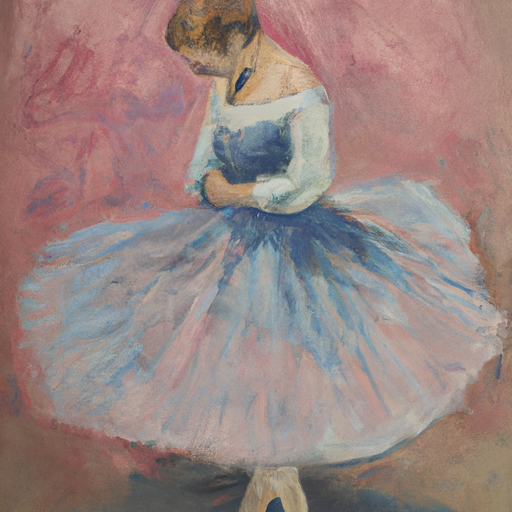
Example of visual style of Degas

Degas

Degas, an influential French artist, is known for his Impressionist paintings and sculptures that depicted everyday life scenes in late 19th-century Paris. He gained fame in the 1870s as a member of the Impressionist movement and continued to refine his style in the following decades. Degas is renowned for his use of color, light, and composition to capture the transient moments and the beauty of modernity. His works often explored dance and ballet, focusing on the movements and emotions of the dancers. Degas' style combined realism with a sense of abstraction, providing a unique perspective on the modern world.

View StyleExplore Style
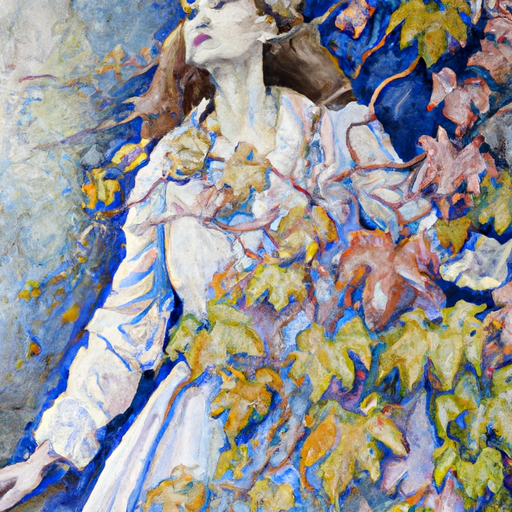
Example of visual style of Edward Steichen

Edward Steichen

Edward Steichen was a renowned American photographer who was influential in shaping the visual style of the 20th century. He was active from the late 19th century through the mid-20th century, and his work helped establish photography as a legitimate form of art. Steichen's images, often characterized by soft lighting, evocative compositions, and exquisite tonalities, showcased his mastery in both black-and-white and color photography. His famous photographs include 'The Pond-Moonlight' (1904) and 'Gloria Swanson' (1924). Steichen's innovative approach to photography and his ability to capture the essence of his subjects made him an influential figure in the history of photography.

View StyleExplore Style
Example of visual style of Georges Lemmen

Georges Lemmen

Georges Lemmen was a Belgian painter and decorative artist who was an important figure in the Neo-Impressionist movement. Active during the late 19th and early 20th centuries, Lemmen is best known for his pointillist style and use of brightly colored dots to create atmospheric and vibrant scenes. He was one of the founding members of the group known as Les XX, which aimed to promote innovative art in Belgium. Lemmen's work became famous for its meticulousness and meticulous attention to detail, as well as its harmonious compositions and emphasis on light and color.

View StyleExplore Style
Example of visual style of Jacob Lawrence

Jacob Lawrence

Jacob Lawrence was an American painter and printmaker who became famous for his unique visual style that merged elements of modernism and African American folklore. His work primarily focused on depicting the African American experience, particularly the Great Migration and the struggles and achievements of black people. Lawrence rose to prominence in the 1940s with his iconic series called 'Migration of the Negro,' which consisted of 60 paintings narrating the mass movement of African Americans from the rural South to the urban North. His bold use of color, simplified forms, and narrative storytelling made him one of the most prominent and important artists of the Harlem Renaissance.

View StyleExplore Style

Example of visual style of James Turrell

James Turrell

James Turrell is an American artist known for his pioneering work in light and space. Starting in the 1960s, Turrell began experimenting with perception and spatial experience through his installations. He is famous for creating immersive environments that manipulate light and color to create mesmerizing visual experiences. Turrell's works often involve simple geometric shapes and utilize architectural elements to control and transform the viewer's perception of light. His exploration of light as a medium has made him a prominent figure in the field of contemporary art.

View StyleExplore Style
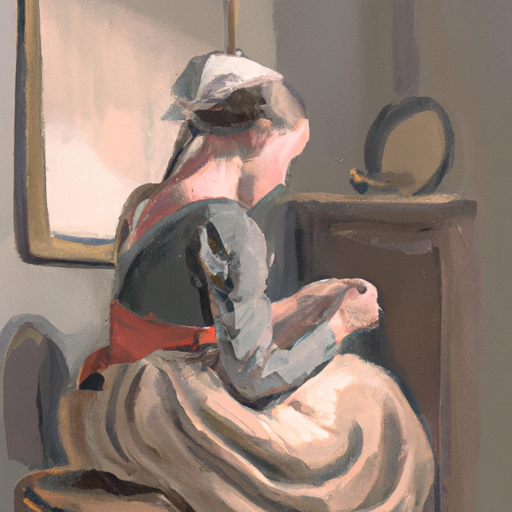
Example of visual style of Johannes Vermeer

Johannes Vermeer

Johannes Vermeer was a Dutch painter known for his realistic and intimate genre scenes. Active during the Dutch Golden Age in the 17th century, Vermeer's style is characterized by his use of light, color, and perspective to create meticulously detailed and atmospheric compositions. His works often feature domestic interiors, portraits, and landscapes, capturing everyday moments with remarkable precision and a sense of quiet beauty. Vermeer's realistic technique and ability to capture the play of light and shadow in his paintings have made him one of the most celebrated artists of his time.

View StyleExplore Style
Example of visual style of John La Farge

John La Farge

John La Farge was an American painter, muralist, and stained-glass window designer who became renowned for his innovative use of color in art. Active during the late 19th and early 20th century, La Farge's style emerged as a reaction to the detailed realism of the Hudson River School. He focused on capturing the mood and atmosphere of a subject rather than exact representation. La Farge is best known for his landscapes, marine scenes, and captivating studies of light and color. His experimentation with opalescent glass in his stained-glass windows earned him popularity in this medium as well.

View StyleExplore Style
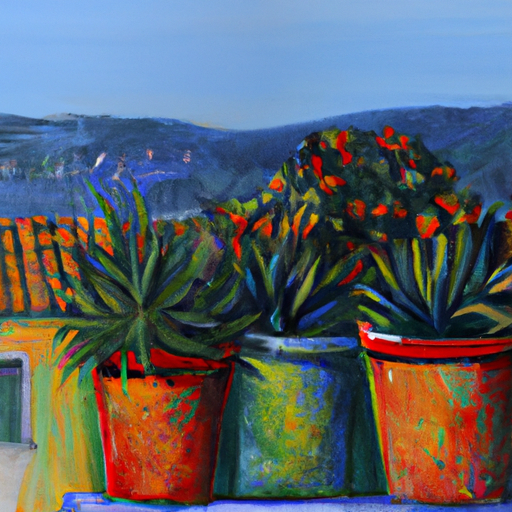
Example of visual style of Joseph Mallord William Turner

Joseph Mallord William Turner

Joseph Mallord William Turner was a prominent English Romantic landscape painter during the late 18th and early 19th centuries. His unique visual style is characterized by his innovative use of light and color, capturing the transformative effects of nature and atmospheric conditions. Turner's works became famous for their dramatic and emotive qualities, often evoking a sense of awe and sublimity. His mature period, from the 1820s to 1850s, saw him experimenting with abstraction and pushing the boundaries of traditional landscapes. Turner's attention to detail, vibrant palettes, and expressive brushwork made him one of the most influential landscape painters of his time.

View StyleExplore Style
Example of visual style of Kandinsky

Kandinsky

Kandinsky is a visual style developed by the Russian artist Wassily Kandinsky. It emerged in the early 20th century, particularly between 1910 and 1914, and is known for its abstract and non-representational nature. Kandinsky believed in the power of color and form to evoke emotions and spiritual experiences. His use of bold, vibrant colors, geometric shapes, and dynamic compositions made this style famous. Kandinsky's groundbreaking artworks, like 'Composition VII' and 'On White II', challenged traditional notions of art and paved the way for abstract expressionism.

View StyleExplore Style
Example of visual style of Karl Schmidt Rottluff

Karl Schmidt Rottluff

Karl Schmidt Rottluff was one of the founding members of the Expressionist movement in Germany. He is best known for his vibrant and bold use of color, exaggerated forms, and dynamic brushwork. Schmidt Rottluff's style emerged in the early 20th century and gained recognition through his association with the artists' group 'Die Brücke' (The Bridge). His work often explored themes of urban life, nature, and the human figure, reflecting the tumultuous social and cultural changes of the time. The combination of intense colors, sharp outlines, and emotional intensity characterized his artwork, making him a prominent figure in the Expressionist movement.

View StyleExplore Style
Example of visual style of Paul Cezanne

Paul Cezanne

Paul Cezanne was a French post-impressionist painter who lived from 1839 to 1906. He is known for his unconventional perspective and use of geometric forms. Cezanne's work laid the foundation for the transition from 19th-century art to a new and radically different 20th-century art. He is famous for his still-life paintings, landscapes, and portraits, where he explored the relationship between color, form, and space. Cezanne's unique approach to composition and his emphasis on structure and volume greatly influenced modern art.

View StyleExplore Style
Example of visual style of Suzuki Harunobu

Suzuki Harunobu

Suzuki Harunobu was a Japanese artist known for his woodblock prints. Active during the Edo period (1760s-1770s), his work is considered a major contribution to the development of ukiyo-e, a genre of woodblock prints popular during this time. Harunobu's prints often depicted beautiful women in elegant settings, capturing the aesthetics of the flourishing urban culture in Japan. His innovative use of color and delicate lines set him apart from his contemporaries, and his prints quickly gained popularity for their refined beauty and intricate details.

View StyleExplore Style
Example of visual style of Titian

Titian

Titian is a visual style developed by the Italian painter Tiziano Vecellio, known as Titian (1488-1576). This style emerged during the High Renaissance and continued to evolve during the Mannerist period. Titian's innovative use of color and brushwork, along with his ability to capture the human form with depth and emotion, made him one of the most influential artists of his time. His famous works include 'Bacchus and Ariadne' (1520-1523), 'Venus of Urbino' (1534), and 'The Assumption of the Virgin' (1516-1518). Titian's style is characterized by vibrant and luminous colors, skillful use of light and shadow, and a dynamic composition that creates a sense of movement and drama.

View StyleExplore Style
Example of visual style of Vanessa Lemen

Vanessa Lemen

Vanessa Lemen is a contemporary American painter known for her ethereal and introspective style. Her works feature dreamy, atmospheric scenes that blend elements of realism and abstraction. Lemen's style emerged in the early 2000s and gained popularity for its emotional depth and sensitive portrayal of the human form. Her mastery of color and light, combined with her ability to capture fleeting moments, have made her a widely recognized figure in the art world.

View StyleExplore Style
Home