

StylopediaStylopedia

Monumental styles on Stylopedia

A visual encyclopedia of monumental styles – use as prompt inspiration for Midjourney, Gemini, or ChatGPT AI when making monumental images

Example of visual style of Anselm Kiefer

Anselm Kiefer

Anselm Kiefer is a German painter known for his expressive and monumental works. His style emerged in the late 1960s and is characterized by a combination of painting, sculpture, and assemblage techniques. Kiefer's artworks often explore themes of memory, history, and the collective German identity. He gained fame in the 1980s for his controversial series 'Heroic Symbols' which reinterpreted Nazi symbols to challenge Germany's past. Kiefer's works are renowned for their large-scale and textured surfaces, often featuring a mix of materials such as straw, clay, ashes, and lead.

View StyleExplore Style
Example of visual style of Beaux Arts Architecture

Beaux Arts Architecture

Beaux Arts Architecture, also known as Ecole des Beaux-Arts style, was prevalent in the late 19th and early 20th centuries. It originated in France and became famous for its grandiose and ornate designs. This style emphasized classical forms, symmetry, and the use of lavish decorations. Beaux Arts architecture is characterized by its monumental facades, elaborate detailing, and grand public buildings such as museums, train stations, and government institutions.

View StyleExplore Style
Example of visual style of Christo And Jeanne Claude

Christo And Jeanne Claude

Christo and Jeanne-Claude were known for their large-scale environmental installations and performances. They became famous for temporarily transforming iconic landmarks into monumental works of art. Their works often required extensive planning, collaboration, and the involvement of communities. From the 1960s until Christo's death in 2020, they created installations such as wrapping the Reichstag in Berlin and creating floating piers on Italy's Lake Iseo.

View StyleExplore Style
Example of visual style of Daniel Burnham

Daniel Burnham

The Daniel Burnham style is characterized by its grandeur and classical architectural elements. It emerged during the late 19th century and early 20th century in the United States. Daniel Burnham was a prominent architect and urban planner known for his neoclassical designs and monumental buildings. His works, such as the Flatiron Building in New York City and the Union Station in Washington D.C., became iconic symbols of the era. The style is characterized by its Beaux-Arts influence, incorporating symmetrical facades, elaborate ornamentation, and monumental scale. It represents the grand ambitions and progressiveness of the Gilded Age and its architectural feats have left a lasting impact on the American urban landscape.

View StyleExplore Style
Example of visual style of Eduardo Kobra

Eduardo Kobra

Eduardo Kobra is known for his vibrant and colorful graffiti murals that blend realism with abstract patterns. His style emerged in the early 2010s and gained widespread recognition for its use of bold colors, intricate designs, and larger-than-life portraits. Kobra became famous for his monumental murals which often depict historical figures, cultural icons, and global issues. He is particularly acclaimed for his ability to capture the essence and emotion of his subjects, creating visually stunning and thought-provoking artworks. Kobra's unique style has brought a fresh and contemporary approach to street art, transforming urban landscapes with his iconic and visually striking murals.

View StyleExplore Style
Example of visual style of French Monarchy

French Monarchy

The French Monarchy style, prevalent from the 16th to the 18th centuries, was characterized by opulence, grandeur, and a sense of power. It reached its peak during the reign of Louis XIV, also known as the Sun King, from 1643 to 1715. This style became famous for its lavish decorations, extravagant fashion, and monumental architecture, exemplified by the Palace of Versailles. It represented the absolute monarchy and aristocratic society of France, reflected in its ornate design and intricate details.

View StyleExplore Style
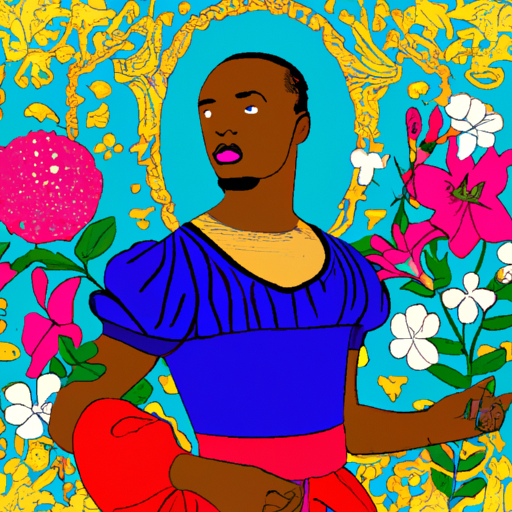
Example of visual style of John Merven Carrere

John Merven Carrere

John Merven Carrere was an American architect known for his Beaux-Arts style which was popular during the late 19th and early 20th centuries. This style was famous for its grandeur and elegance, drawing inspiration from classical Greek and Roman architecture. Carrere's designs often featured symmetrical facades, ornate detailing, and a sense of monumentality. One of his most famous works is the New York Public Library, completed in 1911, which exemplifies the Beaux-Arts style and showcases Carrere's mastery.

View StyleExplore Style
Example of visual style of Palazzo Farnese

Palazzo Farnese

Palazzo Farnese is a Renaissance architectural style known for its grandeur and elegance. Built between 1514 and 1589, the palazzo is located in Rome, Italy. Designed primarily by Renaissance architects Antonio da Sangallo the Younger and Michelangelo, this style became famous for its harmonious proportions, monumental facade, and intricate details. The palazzo's massive dimensions and opulent interior decorations, such as frescoes by renowned artists like Annibale Carracci, further contributed to its fame.

View StyleExplore Style
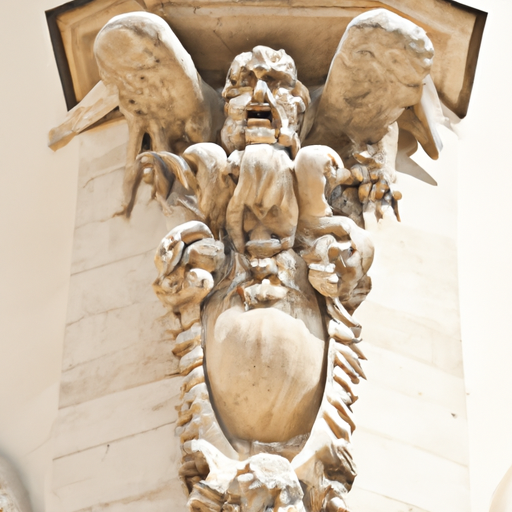
Example of visual style of Pierre Puvis De Chavannes

Pierre Puvis De Chavannes

Pierre Puvis de Chavannes was a French painter known for his unique and influential visual style that bridged the gap between traditional academic art and the emerging Symbolist movement. Active during the mid to late 19th century, his style became famous for its ethereal atmosphere, dreamlike quality, and monumental compositions. Puvis de Chavannes incorporated elements of classical mythology, allegorical figures, and simplified forms to convey his poetic and philosophical ideas. His emphasis on flat and muted colors, along with a preference for symbolic storytelling, made his works distinct and influential in the art world of his time.

View StyleExplore Style
Example of visual style of Richard Serra

Richard Serra

Richard Serra is an American artist known for his minimalist and monumental sculptures. He rose to prominence in the late 1960s and early 1970s with his site-specific steel sculptures that redefine spatial boundaries and challenge the viewer's perception of space and time. Serra's work often consists of large, curved or spiraling metal forms that interact with the architectural environment. His sculptures invite viewers to physically engage with the artwork and experience its scale and weight, creating an immersive and contemplative experience. Serra's innovative approach to sculpture has made him a key figure in contemporary art.

View StyleExplore Style
Example of visual style of Walter De Maria

Walter De Maria

Walter De Maria was an American artist known for his minimalist and earthwork sculptures. He emerged as a prominent figure in the art world during the 1960s and 1970s. His visual style can be described as stark, geometric, and monumental. De Maria's sculptures often featured simple geometric forms, such as grids, circles, and lines, and were characterized by their large scale and precise arrangement. One of his most famous works is 'The Lightning Field' (1977) consisting of a grid of 400 stainless steel poles in the New Mexico desert. De Maria's emphasis on pristine geometric forms and the use of natural elements in his artworks became influential in the development of land art and minimalism.

View StyleExplore Style
Home