
StylopediaStylopedia

Minimalism styles on Stylopedia

A visual encyclopedia of minimalism styles – use as prompt inspiration for Midjourney, Gemini, or ChatGPT AI when making minimalism images

Example of visual style of Ai Weiwei

Ai Weiwei

Ai Weiwei is a contemporary Chinese artist known for his politically charged, conceptual artwork. His visual style combines elements of minimalism, conceptualism, and social commentary. Weiwei gained prominence in the early 2000s for his provocative installations, sculptures, photography, and documentaries. His use of unconventional materials, such as porcelain, wood, and everyday objects, juxtaposed with traditional Chinese craftsmanship, challenges the boundaries of art and raises questions about government control, human rights, and censorship in China.

View StyleExplore Style
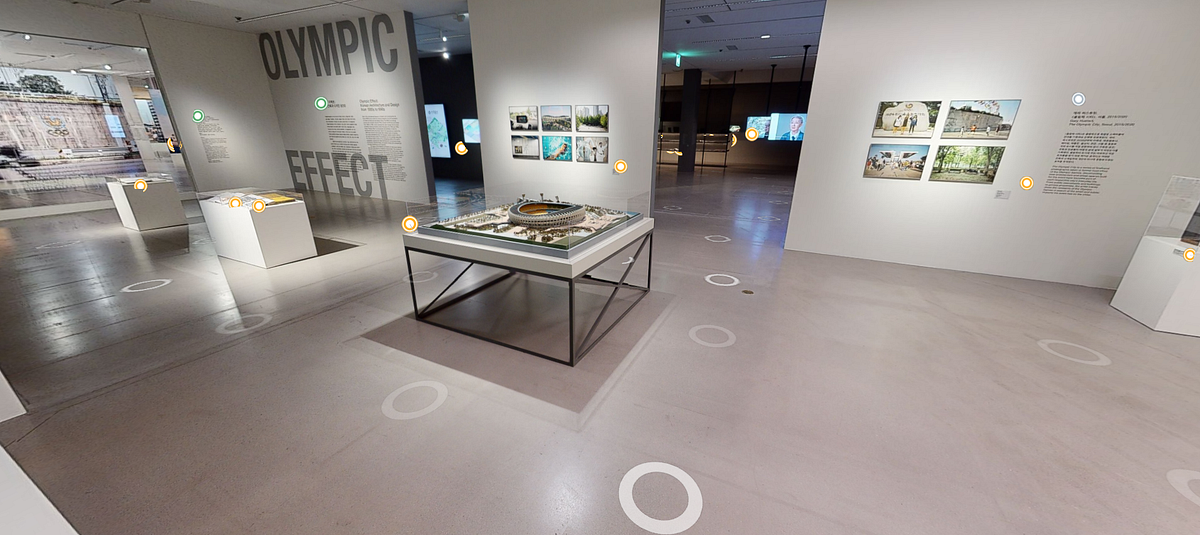
Example of visual style of Carmen Herrera

Carmen Herrera

Carmen Herrera is a visual style characterized by bold geometric abstraction and crisp lines. Originating in the mid-20th century, it gained recognition for its unique approach to minimalism and vibrant color palettes. Herrera's style became famous for her use of sharp angles, intersecting shapes, and a limited color palette consisting of mainly primary colors. Her work highlights a strong sense of balance and symmetry, creating a visually striking and harmonious composition.

View StyleExplore Style
Example of visual style of Charlie Brown

Charlie Brown

The visual style of Charlie Brown is a simplistic and minimalistic art style characterized by its hand-drawn, black and white comic strip aesthetic. This style was made famous through the popular comic strip 'Peanuts' created by Charles M. Schulz. Running from 1950 to 2000, 'Peanuts' explored the everyday lives and musings of a group of young children, with Charlie Brown as the central character. The distinctive visual style of 'Charlie Brown' became iconic and instantly recognizable, capturing the essence of childhood innocence and introspection.

View StyleExplore Style
Example of visual style of Color Field Painting

Color Field Painting

Color Field Painting emerged in the late 1950s and became widely known in the 1960s. It is characterized by large fields of solid color that are applied in a smooth and even manner on the canvas, creating a sense of flatness. This style de-emphasizes the brushstrokes and focuses on the emotional and visual impact of color alone. The artists associated with this style sought to create a pure visual experience, exploring the relationships between color, form, and space. Prominent figures like Mark Rothko and Helen Frankenthaler played a crucial role in making Color Field Painting famous.

View StyleExplore Style
Example of visual style of D Bridge

D Bridge

D Bridge is a visual style that emerged in the 1970s and gained popularity in the 1980s. It is characterized by its bold, geometric shapes, vibrant color schemes, and abstract designs. D Bridge became famous for its ability to combine elements of both modernism and minimalism, creating visually striking and dynamic compositions. The style reached its peak during the 1990s with the rise of digital design tools, which allowed for greater experimentation and innovation.

View StyleExplore Style
Example of visual style of David Byrne

David Byrne

The visual style of David Byrne is characterized by its bold, eclectic and unconventional nature. It emerged in the late 1970s and gained prominence during the 1980s. Known for his work as a musician, artist, and performer, David Byrne's visual style became famous through his collaborations with various artists and designers. Byrne's style is a fusion of avant-garde, post-punk, and pop art, incorporating elements of surrealism and minimalism. His use of vibrant colors, geometric patterns, and the juxtaposition of seemingly unrelated objects create visually captivating and thought-provoking compositions. This style gained a significant following due to its innovative and boundary-pushing approach to visual expression.

View StyleExplore Style
Example of visual style of Donald Judd

Donald Judd

Donald Judd was an influential American artist and writer associated with minimalism in the 1960s. He is known for his three-dimensional wall-mounted sculptures and furniture designs. Judd's work challenged traditional notions of art by emphasizing the importance of space, objecthood, and industrial fabrication. His geometric sculptures made of various materials, such as steel, aluminum, and plexiglass, defined the visual style of minimalism. Judd's art became famous for its simplicity, geometric precision, and its exploration of the relationship between the object, space, and the observer.

View StyleExplore Style
Example of visual style of Edward Tufte

Edward Tufte

Edward Tufte is a prominent data visualization expert and professor emeritus of political science, statistics, and computer science at Yale University. His work in the field of visual design and data presentation has greatly influenced the way information is communicated. Tufte's style, which emerged in the late 20th century, emphasizes clarity, simplicity, and the elimination of unnecessary decoration. His famous book 'The Visual Display of Quantitative Information' (1983) brought him widespread recognition. Tufte's style became famous for its emphasis on conveying large amounts of data coherently, minimalism in design, and the use of high-quality graphics and typography.

View StyleExplore Style
Example of visual style of Erik Satie

Erik Satie

The visual style of Erik Satie, the influential French composer, is characterized by simplicity, minimalism, and a touch of whimsy. Satie's visual style emerged in the late 19th and early 20th centuries, coinciding with his musical career. He was known for his avant-garde approach and his rejection of traditional norms. Satie's style gained fame for its unconventional and experimental nature, as well as its ability to evoke emotions through simplicity and repetition.

View StyleExplore Style
Example of visual style of Finnish Design

Finnish Design

Finnish Design refers to the design aesthetic that emerged in Finland during the mid-20th century and gained international recognition. Characterized by simplicity, functionality, and timeless elegance, Finnish Design became famous for its clean lines, minimalism, and high-quality craftsmanship. It gained prominence in the 1950s and 1960s when Finnish designers like Alvar Aalto, Tapio Wirkkala, and Marimekko revolutionized the field. Emphasizing the use of local materials, such as birch wood and glass, Finnish Design has had a lasting impact on modern design principles.

View StyleExplore Style
Example of visual style of Frank Stella

Frank Stella

Frank Stella is an American painter known for his minimalist and abstract art. He emerged as a prominent figure in the art world in the late 1950s and early 1960s with his groundbreaking Black Paintings. These paintings featured geometric shapes and bold, flat colors. Stella's work challenged traditional notions of composition and pushed the boundaries of what could be considered art. His unique style continued to evolve throughout the years, incorporating new materials and techniques. He is considered one of the pioneers of minimalism and his work has had a significant impact on contemporary art.

View StyleExplore Style
Example of visual style of Giorgio Armani

Giorgio Armani

Giorgio Armani is a style known for its timeless elegance, sophistication, and minimalism. Founded in 1975 by Italian designer Giorgio Armani, this visual style became famous for revolutionizing men's and women's fashion. Armani introduced clean lines, neutral colors, and luxurious fabrics, creating a modern and understated aesthetic. The brand gained popularity in the 1980s with the iconic power-suit, which became a symbol of success and confidence. Armani's style has continued to evolve and innovate, always maintaining a sense of timeless and effortless charm.

View StyleExplore Style
Example of visual style of Hiroshi Sugimoto

Hiroshi Sugimoto

Hiroshi Sugimoto is a contemporary Japanese photographer known for his minimalist and conceptual approach to black and white photography. He gained fame in the 1970s with his series 'Seascapes' and 'Theaters', which explore the concepts of time, memory, and perception. Sugimoto's meticulous compositions and long exposure times create ethereal and timeless images. His work is characterized by its precise framing, high contrast, and exquisite use of light and shadow.

View StyleExplore Style
Example of visual style of International Typographic Style

International Typographic Style

The International Typographic Style, also known as Swiss Style, emerged in the 1950s and became widely popular in the 1960s. It is characterized by its minimalistic approach to design, focusing on clean and organized layouts with strong emphasis on typography and grid-based compositions. The style is famous for its use of sans-serif typefaces, asymmetric layouts, and a strong use of photography. It prioritizes legibility, clarity, and objectivity in design, with an emphasis on simplicity and precision. This style gained recognition through the works of influential designers like Josef Müller-Brockmann, Max Bill, and Armin Hofmann.

View StyleExplore Style
Example of visual style of James Bond

James Bond

The James Bond visual style is known for its sophisticated and luxurious aesthetic. It gained popularity from the 1960s onwards, with the release of the James Bond film series. This style is characterized by its sleek and elegant design, incorporating modern and high-tech elements. The use of minimalism, clean lines, and high contrast adds to its distinctive look. The Bond style is famous for its iconic imagery, including the suave and impeccably dressed secret agent, beautiful Bond girls, luxury cars, gadgets, and exotic locations.

View StyleExplore Style
Example of visual style of Japanese Design

Japanese Design

Japanese Design is a style that emerged during the Edo period (1603-1868) and continues to be influential in contemporary design. It is known for its minimalism, refinement, and attention to detail. The beauty of imperfection and simplicity are key elements in this style. The use of natural materials such as wood and paper, as well as the incorporation of traditional craftsmanship techniques, are distinctive features. Japanese Design gained international recognition in the late 19th century through the works of artists like Hokusai and Hiroshige, who popularized the Ukiyo-e woodblock prints. The harmony between form and function along with the integration of nature are core principles that made Japanese Design famous.

View StyleExplore Style
Example of visual style of Kenya Hara

Kenya Hara

Kenya Hara is a minimalist Japanese graphic designer known for his influential work in art direction and design. He rose to fame in the late 1990s as the art director for Muji, a renowned Japanese retail company. Hara's visual style is characterized by simplicity, minimalism, and an emphasis on empty space. His designs often feature clean lines, subtle textures, and a limited color palette. Hara is known for his ability to create visually striking and meaningful designs using a minimalist approach.

View StyleExplore Style
Example of visual style of Ludwig Mies Van Der Rohe

Ludwig Mies Van Der Rohe

Ludwig Mies van der Rohe was a German-American architect who is recognized as one of the pioneers of modern architecture. His style, commonly referred to as the International Style, emerged during the 1920s and continued to be influential in the mid-20th century. Mies van der Rohe is known for his minimalist and functional approach to design. He believed in the idea of ‘less is more’ and sought to create structures that showcased simplicity, open spaces, and the use of modern materials, such as glass, steel, and concrete. His architecture focused on clean lines, geometrical shapes, and a balance between form and function. Mies van der Rohe's designs, including the Barcelona Pavilion and the Seagram Building, have become iconic symbols of modernism.

View StyleExplore Style
Example of visual style of Marina Abramovic

Marina Abramovic

Marina Abramovic is a performance artist known for her groundbreaking and provocative work. Her visual style is characterized by minimalism, introspection, and a focus on the body as a medium. Abramovic gained fame in the 1970s and 1980s through performances that pushed the boundaries of art and tested the limits of her physical and mental endurance. She is best known for her piece 'The Artist Is Present' performed at the Museum of Modern Art in 2010, which involved sitting silently across from individual visitors for a total of 736 hours. This performance brought her international recognition and solidified her reputation as a pioneer of performance art.

View StyleExplore Style
Example of visual style of Max Bill

Max Bill

The Max Bill visual style emerged in the 1950s and is characterized by its simplicity, precision, and mathematical influence. Max Bill, a Swiss architect, artist, and designer, played a pivotal role in popularizing this style. He believed in the integration of art, design, and technology, often combining geometric forms with clean lines and harmonious proportions. The style gained fame through Bill's groundbreaking work in product design, typography, and graphic design.

View StyleExplore Style
Example of visual style of Mid Century Design

Mid Century Design

Mid Century Design refers to the aesthetic style of the mid-20th century, specifically the period between the 1930s to the 1960s. It is known for its clean lines, organic forms, and innovative use of materials. Famous for its simplicity and functionality, Mid Century Design became popular through its emphasis on minimalism and the integration of nature with modern living. It was influenced by the Bauhaus movement and the works of renowned designers such as Charles and Ray Eames, Eero Saarinen, and Arne Jacobsen.

View StyleExplore Style
Example of visual style of Mies Van Der Rohe

Mies Van Der Rohe

Mies van der Rohe was a German architect who is widely regarded as one of the pioneers of modern architecture. He is famous for his minimalist and functional designs that emphasized the use of clean lines, open spaces, and the innovative use of materials, such as steel and glass. His architectural style became known as the International Style, and he played a significant role in the development of this movement during the 1920s and 1930s. Mies' work was characterized by simplicity, elegance, and a focus on the essential elements of a building, often described by the phrase 'less is more'.

View StyleExplore Style
Example of visual style of Miuccia Prada

Miuccia Prada

Miuccia Prada is known for her innovative and unconventional visual style in fashion. She rose to fame in the late 1980s and early 1990s, challenging traditional fashion conventions and introducing a mix of high and low culture influences. Prada's style is characterized by a blend of minimalism, modernism, and avant-garde aesthetics. Her use of unexpected color combinations, bold patterns, and unconventional materials revolutionized the fashion industry and influenced numerous designers. Miuccia Prada's designs are often described as intellectual, edgy, and sophisticated.

View StyleExplore Style
Example of visual style of Modern Design

Modern Design

Modern Design emerged during the early 20th century, influenced by the Industrial Revolution and advancements in technology. It is characterized by simplicity, functionality, and clean lines. The style became popular between the 1920s and 1950s, with notable movements such as the Bauhaus and the International Style. Modern Design rejected ornate decorations and focused on minimalism, using materials like steel, glass, and concrete. Its emphasis on practicality and mass production made it accessible and influential. Famous modern designers include Le Corbusier, Charles and Ray Eames, and Ludwig Mies van der Rohe.

View StyleExplore Style
Example of visual style of Modern Japanese Aesthetics

Modern Japanese Aesthetics

Modern Japanese Aesthetics is a visual style that emerged in Japan during the late 19th century and continues to influence contemporary design. It combines traditional Japanese design elements with modern and minimalist principles. This style became famous during the Meiji period (1868-1912) when Japan started embracing Western influences while preserving their cultural identity. It gained further recognition in the 20th century with the rise of influential Japanese designers like Kenzo Tange and Shiro Kuramata.

View StyleExplore Style
Example of visual style of Richard Avedon

Richard Avedon

Richard Avedon was a renowned fashion and portrait photographer who revolutionized the field with his stark and minimalist style. Active from the 1940s until his death in 2004, Avedon's iconic black and white photographs captured the essence of his subjects in a straightforward and honest manner. His signature style was characterized by the use of a white backdrop, minimal props or distractions, and an emphasis on the subject's natural expressions and emotions. Avedon's groundbreaking work in the fashion industry and his collaboration with influential figures such as Diana Vreeland and Harper's Bazaar helped establish him as one of the most important photographers of the 20th century.

View StyleExplore Style
Home