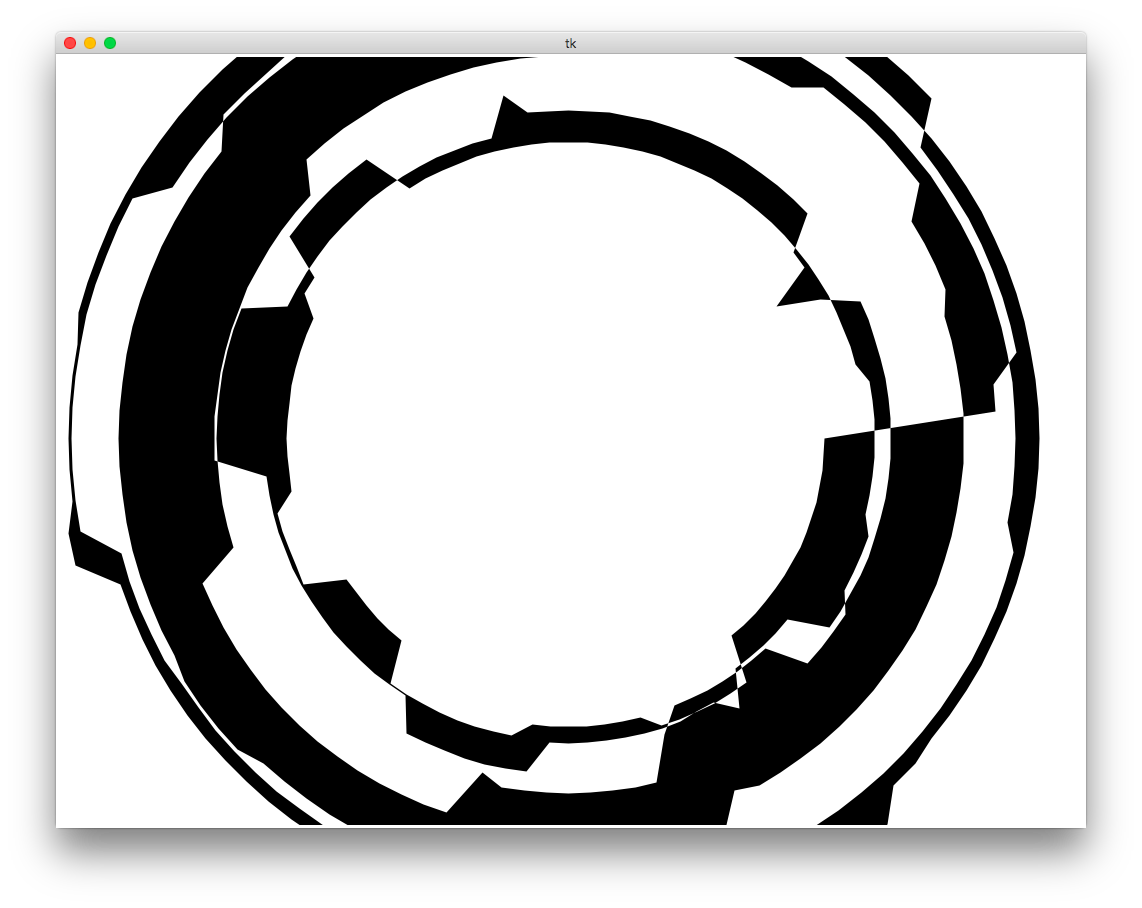
Josh Nimoy
Josh Nimoy's visual style is characterized by futuristic and geometric designs influenced by mathematics and technology. His work gained popularity in the early 2000s for its unique blend of art and science.
View StyleExplore Style Stylopedia
A visual encyclopedia of mathematics styles – use as prompt inspiration for Midjourney, Gemini, or ChatGPT AI when making mathematics images
Josh Nimoy's visual style is characterized by futuristic and geometric designs influenced by mathematics and technology. His work gained popularity in the early 2000s for its unique blend of art and science.
View StyleExplore Style
Georg Nees was a German artist and mathematician who is considered one of the pioneers of computer-generated art. He is best known for his works created during the 1960s and 1970s, which earned him fame as a leading figure in the field of algorithmic art. Nees's art was characterized by a minimalist aesthetic, precision, and the use of simple geometric shapes. He explored the potential of computers to create art and developed various algorithms and computer programs to generate unique visual compositions. Nees's work became famous for its innovative approach to art-making and its integration of mathematics and technology.
View StyleExplore Style
John Von Neumann was a Hungarian-American mathematician, physicist, computer scientist, and polymath who made significant contributions to many fields. He became famous for his work on the Manhattan Project during World War II and for his concept of a self-replicating machine, which laid the foundation for the field of nanotechnology. Von Neumann also pioneered the design of the modern digital computer and made important contributions to game theory and the development of the atomic bomb. His work spanned from the early 1940s to his death in 1957.
View StyleExplore Style
Monte Carlo Integration is a computational technique that uses random sampling to estimate complex mathematical quantities. It was developed in the 1940s and gained popularity in various fields such as physics, computer science, and finance. This technique is famous for its ability to handle high-dimensional problems and provide approximate solutions with statistical guarantees.
View StyleExplore Style
Robert J. Lang is a pioneer in contemporary origami art. His style is characterized by intricate and complex geometric designs, often inspired by mathematics and nature. Lang became famous in the 1990s for developing new techniques that pushed the boundaries of what could be achieved with origami.
View StyleExplore Style
Stanislaw Ulam is not associated with a specific visual style since he was a mathematician and a scientist rather than an artist or designer. Ulam made significant contributions to various fields, including mathematics, physics, and computer science. He is best known for his work on the Manhattan Project during World War II, where he helped develop the hydrogen bomb. Ulam's contributions to the field of Monte Carlo methods and his work on the Tsetlin machine are also noteworthy.
View StyleExplore Style